
Join Our Webinar
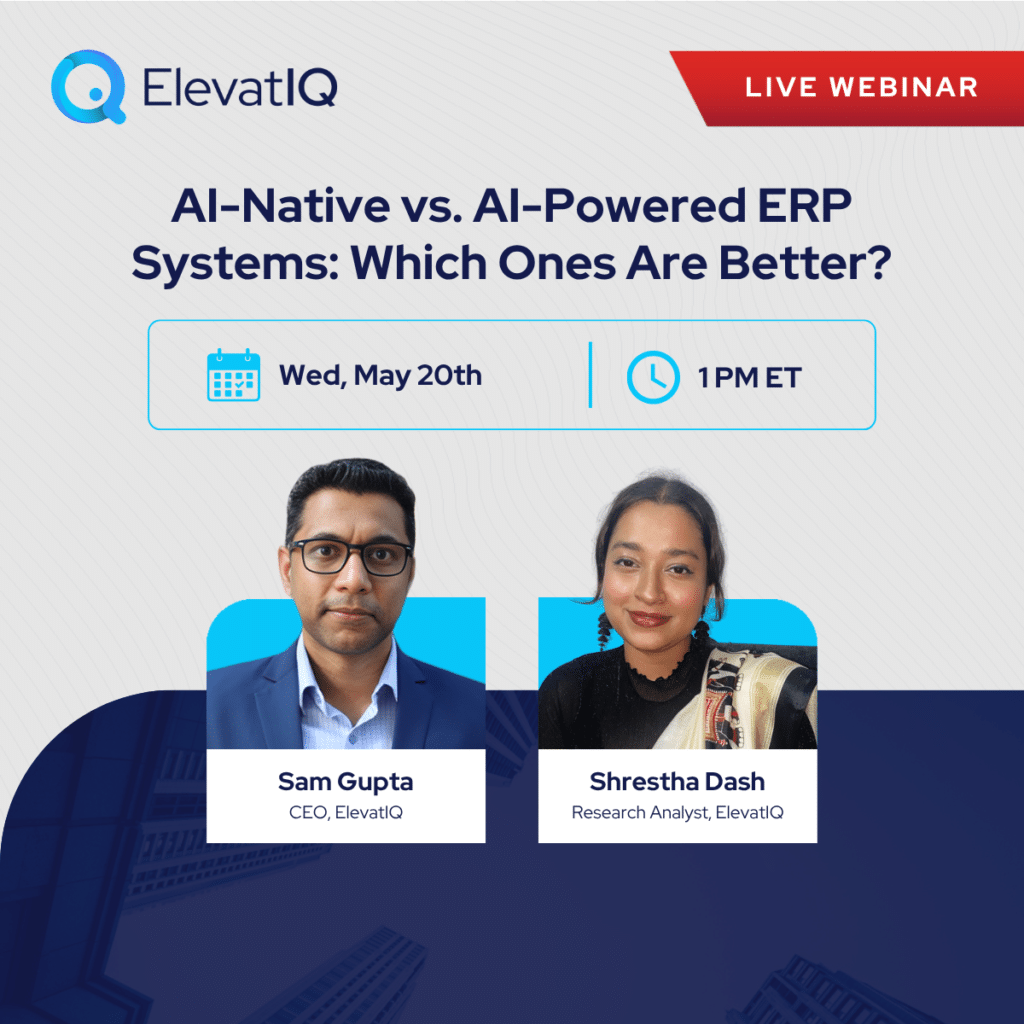
AI-Native vs. AI-Powered ERP Systems: Which Ones Are Better?
May 20th, 2026 | 1 PM ET
Selecting an ERP system now involves more than modules, workflows, and reporting. Organizations must evaluate AI-powered ERP versus AI-native ERP architectures. Although vendors group copilots, AI agents, OCR, and predictive analytics together, their architectures differ significantly. This webinar explains why those differences matter. More importantly, it reveals how similar user experiences may hide major governance and scalability trade-offs. It also examines transactional integrity, implementation complexity, and long-term maintainability. As AI adoption accelerates, many organizations risk prioritizing marketing claims over operational fit.
Next, we break down the structural differences between AI-powered and AI-native ERP systems. Traditional AI-powered ERP platforms extend existing transactional systems with layered AI capabilities. These capabilities include forecasting engines, anomaly detection, workflow recommendations, and external LLM integrations. In contrast, AI-native ERP platforms use adaptive and intent-driven workflows from inception. Consequently, these systems may improve flexibility and workflow experimentation. However, they may also introduce challenges around auditability, controls, reconciliation, and operational predictability. This session explores how these architectural philosophies impact real-world ERP implementations and enterprise operations.
Finally, we examine the risks, trade-offs, and vendor evaluation criteria shaping modern ERP decisions. Many ERP demonstrations optimize for “wow factor” while hiding implementation effort and governance limitations. Therefore, this webinar highlights the biggest red flags in AI ERP marketing. These include unrealistic implementation promises, overstated AI autonomy, and simplified enterprise narratives. We also discuss which industries align best with each ERP architecture. In addition, we explore how ERP systems may evolve into systems of reasoning. Attendees will leave with a practical framework for evaluating AI ERP strategies using governance maturity, operational realities, and architectural alignment.
Register to save a spot today!
Join Now
Learning Objectives:
Understand the architectural differences between AI-powered and AI-native ERP systems
Learn how AI design choices impact governance, scalability, auditability, and transactional integrity
Identify the operational trade-offs between flexibility and control in modern ERP architectures
Evaluate which industries and business models align best with each ERP approach
Recognize the hidden risks behind AI ERP marketing claims and vendor demonstrations
Develop a practical framework for evaluating AI ERP vendors beyond surface-level AI features
Understand how AI may reshape ERP systems from transactional platforms into conversational and reasoning-driven environments

Speakers
Sam Gupta
CEO | ElevatIQ
Sam Gupta has been a thought leader in the digital transformation space for nearly two decades, with the primary focus on business software. Sam is rated as #1 thought leader in the ERP and CRM categories and #5 in the digital transformation category on Thinkers 360. He is also among the top 100 thought leaders across all categories. He has been part of large transformation initiatives for Fortune 500 corporations, but now spends his time consulting with SMEs as a CEO at ElevatIQ. Sam regularly speaks at industry conferences and contributes his experiences through many popular blogs and publications. He also hosts a podcast called WBSRocks, focused on business growth through digital transformation, where he interviews top influencers and executives focused on digital transformation.
Shrestha Dash
Industry Research Analyst | ElevatIQ
Shrestha Dash is passionate about uncovering actionable insights and exploring the ever-evolving landscape of technology and digital transformation. With a strong analytical foundation, she delves into topics such as ERP, enterprise software, and digital ecosystems, offering in-depth research and thoughtful analysis. Currently working as an Industry Research Analyst at ElevatIQ, she combines her expertise in research with a flair for storytelling, helping businesses navigate complex industry trends and make informed decisions.