
Join Our Webinar
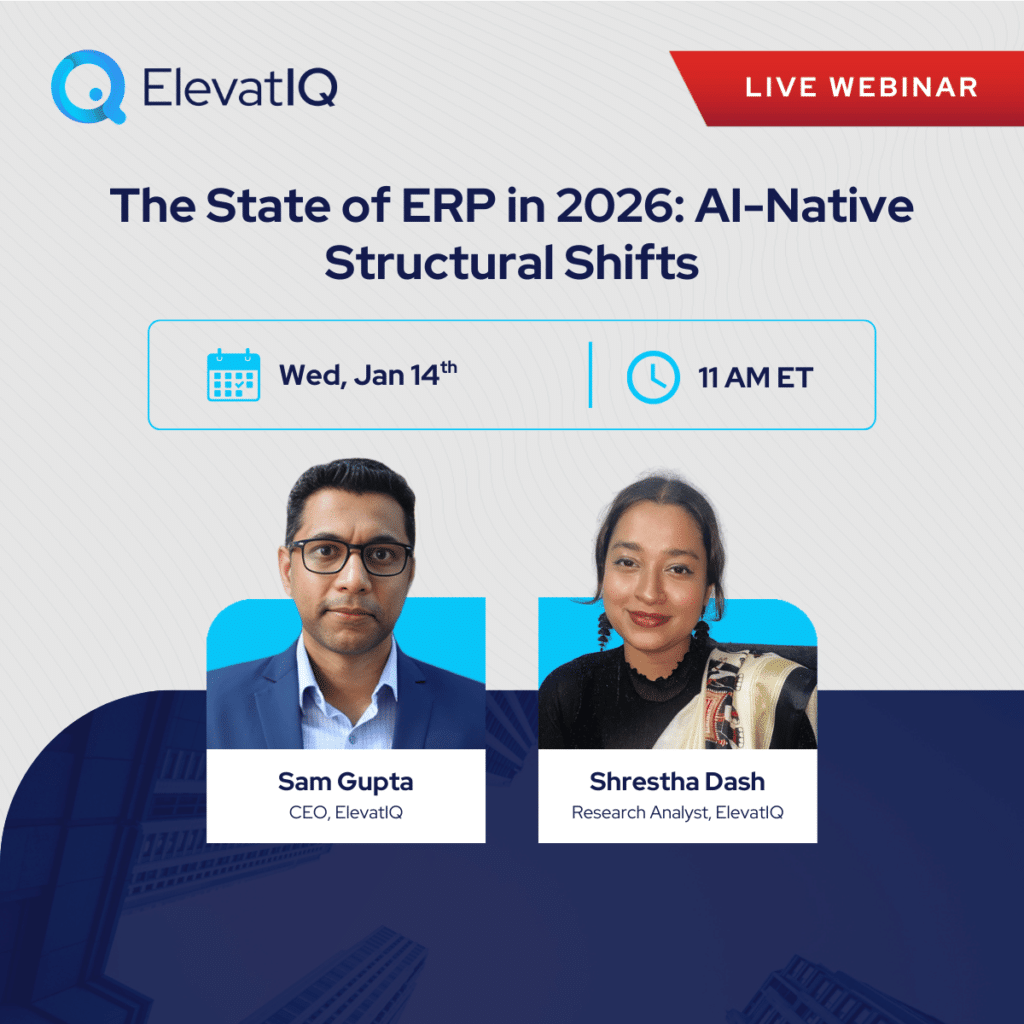
The State of ERP in 2026: Structural Shifts Driven by AI-Native Platforms
Jan 14th, 2025 | 11 AM ET
For decades, ERP systems served as the backbone of enterprise operations. They enabled process consolidation, reduced data silos, and strengthened financial control. However, these systems also introduced structural tradeoffs. Implementations took longer. Data models became rigid. Skill requirements increased.
Even simple reports or customizations became expensive. As organizations enter 2026, tolerance for these constraints is fading. Markets move faster. Capital discipline is tighter. User expectations now reflect modern SaaS experiences.
Meanwhile, the ERP landscape is changing rapidly. Economic uncertainty and shifting business models are raising pressure on IT decisions. At the same time, AI capabilities are advancing quickly. Traditional on-prem, cloud-migrated, and cloud-native vendors are responding in familiar ways. Many rely on marketing narratives, agentic overlays, or acquisitions. In parallel, AI-native platforms are challenging core ERP assumptions. They question rigid data hierarchies, transactional boundaries, and system design norms. This session separates true architectural change from superficial modernization. It also clarifies where AI-native vendors can—and cannot—disrupt the market.
Finally, the webinar offers a practical framework for buyers. We define what an AI-native platform truly is—and what it is not. Then, we explain how AI is reshaping the ERP architecture stack. We also examine new risks. These include data integrity, governance gaps, scalability limits, and vendor maturity concerns. Attendees gain a structured approach to reassessing business models and architectures. The goal is clarity, not hype. AI must support a compelling business case.
Register to save a spot today!
Join Now
Learning Objectives:
Understand the structural strengths and limitations of traditional ERP systems and why many of these constraints are colliding with 2026 business realities.
Assess how economic pressure, SaaS expectations, and AI-driven development speed are reshaping ERP design and buyer expectations.
Distinguish between on-prem, cloud-migrated, cloud-native, and limited-suite vendors—and evaluate how each is likely to be disrupted by AI-native platforms.
Define what qualifies as an AI-native platform, including its architectural implications, current maturity limits, and scalability tradeoffs.
Identify how AI-native architectures change process flows, data orchestration, and the relationship between transactional systems and planning layers.
Evaluate emerging risks in AI-native system adoption, including data governance, over-customization, vendor viability, and future migration challenges.
Develop a disciplined, business-case-driven approach to reassessing enterprise architecture and AI adoption decisions in 2026 and beyond.

Speakers
Sam Gupta
CEO | ElevatIQ
Sam Gupta has been a thought leader in the digital transformation space for nearly two decades, with the primary focus on business software. Sam is rated as #1 thought leader in the ERP and CRM categories and #5 in the digital transformation category on Thinkers 360. He is also among the top 100 thought leaders across all categories. He has been part of large transformation initiatives for Fortune 500 corporations, but now spends his time consulting with SMEs as a CEO at ElevatIQ. Sam regularly speaks at industry conferences and contributes his experiences through many popular blogs and publications. He also hosts a podcast called WBSRocks, focused on business growth through digital transformation, where he interviews top influencers and executives focused on digital transformation.
Shrestha Dash
Industry Research Analyst | ElevatIQ
Shrestha Dash is passionate about uncovering actionable insights and exploring the ever-evolving landscape of technology and digital transformation. With a strong analytical foundation, she delves into topics such as ERP, enterprise software, and digital ecosystems, offering in-depth research and thoughtful analysis. Currently working as an Industry Research Analyst at ElevatIQ, she combines her expertise in research with a flair for storytelling, helping businesses navigate complex industry trends and make informed decisions.