
Last Updated on April 2, 2026 by Shrestha Dash
When Epicor announced the end of on-premise development for Kinetic, Prophet 21, and BisTrack in late 2024, the messaging emphasized “security, scalability, and cognitive ERP capabilities.” What the announcement may not have fully emphasized is the financial reality facing 20,000+ organizations now evaluating cloud migration: the Epicor migration cost extends far beyond subscription license fees, with hidden expenses in customization conversion, data migration, integration rebuilding, and compounding subscription escalations which can, in some cases, result in a 10-year financial commitment exceeding the original on-premise total cost of ownership.
For CFOs and finance decision-makers evaluating Epicor’s cloud migration path, understanding true costs requires looking beyond vendor-provided migration calculators and Ascend program fixed-fee promises. The real question is not “what does Epicor quote for migration?” but “what will this actually cost our organization over the contract lifecycle when we account for customization rebuilds, subscription price escalation, and operational changes that cloud architecture mandates?”
This analysis examines cost categories that vendors may not fully emphasize during migration sales cycles, compares perpetual license TCO to subscription pricing across realistic timelines, identifies contract lock-in provisions that can significantly reduce negotiating leverage post-migration, and provides CFOs with the financial framework to evaluate whether Epicor cloud migration, extended on-premise operation, or alternative vendor selection represents the optimal financial path.
Epicor Migration Cost: Quotes vs. What You’ll Actually Pay
Understanding Epicor migration cost requires separating vendor-provided estimates from the full financial burden organizations experience when migrations are complete. Vendors quote software, implementation services, and data migration. Reality includes customization conversion failures, integration rebuilding, subscription escalation, and operational inefficiencies during transition periods.
What Epicor Quotes: The Ascend Program “Fixed Fee” Narrative
Epicor promotes its Ascend with Epicor program as providing “AI-powered readiness assessments, proven migration methodologies, and fixed-fee pricing to reduce risk.” The fixed-fee positioning suggests budget certainty, but examining what’s included reveals substantial cost categories that fall outside Ascend scope.
Ascend program typically includes:
- Software license conversion from perpetual to subscription (first-year subscription credit for perpetual license trade-in value)
- Core data migration for standard entities (customers, vendors, items, transactions)
- Base system configuration to replicate on-premise setup in cloud environment
- Standard integration migration for supported third-party systems
- User training for cloud-specific interface changes
What this means financially: For a mid-market manufacturer with 75 users, Ascend program costs might be quoted at $150,000–$250,000 for migration services plus first-year subscription fees of $150,000–$180,000 ($150–$200 per user monthly). Total Year 1 investment: $300,000–$430,000, which appears competitive against ongoing on-premise maintenance costs.
What You’ll Actually Pay: The Hidden Cost Reality
The gap between quoted Epicor migration cost and realized expenses emerges when organizations discover what Ascend programs exclude and which operational realities cloud architecture creates.
Customization Conversion ($100,000–$500,000+)
On-premise Epicor deployments typically include extensive customizations, including custom reports, modified workflows, specialized dashboards, and industry-specific functionality built over years of incremental development. Cloud architecture uses different frameworks, APIs, and development models, meaning on-premise customizations cannot simply “lift and shift” to cloud.
Organizations face three options for each customization:
- Rebuild using cloud-compatible frameworks: Requires developer time to recreate functionality using Epicor’s Business Activity Query (BAQ), Epicor Functions, or Kinetic cloud development tools. Cost: $15,000–$50,000 per complex customization depending on scope.
- Replace with standard cloud features: Accept that cloud’s out-of-box functionality is “close enough” to custom workflows. Cost: Zero dollars, but operational impact from lost functionality that drove competitive advantage or compliance requirements.
- Accept functional gaps: Abandon customizations entirely and operate without the capability. Cost: Productivity loss, manual workarounds, or process inefficiency that compounds annually.
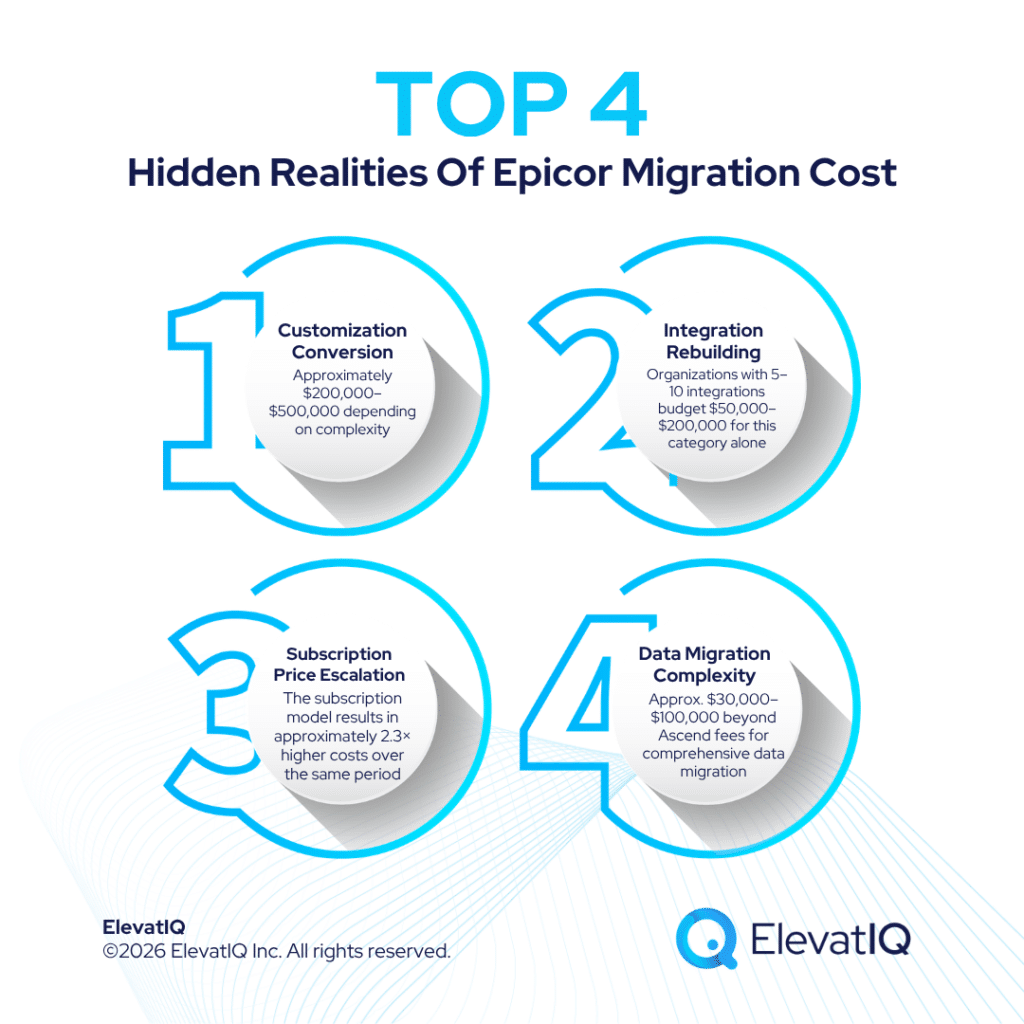
For organizations with 20+ customizations (common in mature Epicor deployments), conversion costs can range from approximately $200,000–$500,000 depending on complexity.
Integration Rebuilding ($50,000–$200,000)
Cloud ERP architecture changes integration models. On-premise direct database connections, file-based integrations, and middleware tools designed for on-premise environments may not function with cloud deployments. Organizations must rebuild integrations using cloud-compatible APIs, web services, or Epicor’s Integration as a Service (IaaS) platform.
Common integrations requiring rebuilding:
- E-commerce platforms (Shopify, BigCommerce, custom web stores)
- Third-party warehouse management systems (WMS)
- Customer relationship management (Salesforce, HubSpot)
- Business intelligence and reporting tools (Power BI, Tableau)
- Manufacturing execution systems (MES)
- Electronic data interchange (EDI) with suppliers and customers
Each integration rebuild can cost approximately $10,000–$40,000 depending on complexity. Organizations with 5–10 integrations budget $50,000–$200,000 for this category alone.
Subscription Price Escalation (Compounding 10-Year Impact)
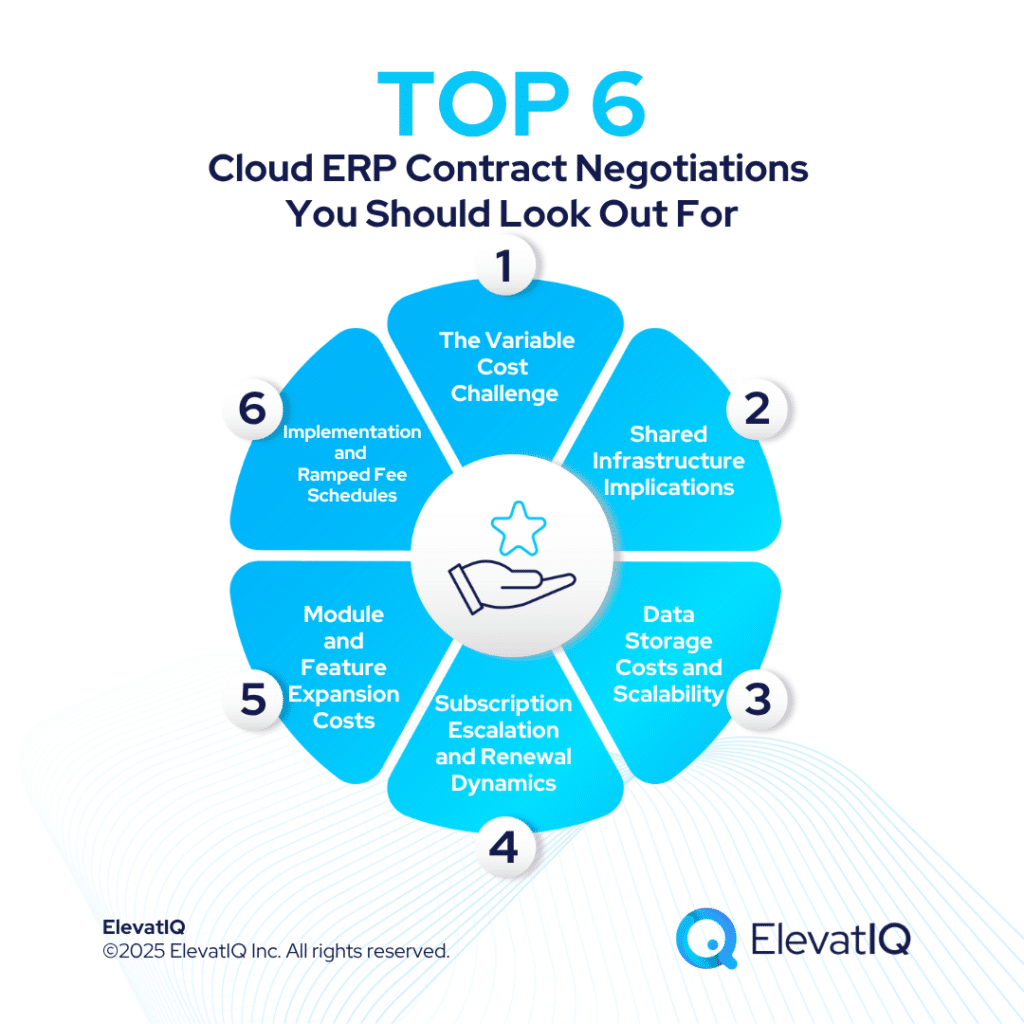
Epicor cloud subscriptions include annual price escalation clauses, typically 3–5% per year tied to CPI or vendor discretion. While Year 1 subscription costs appear manageable, compounding escalation dramatically increases 10-year TCO.
Subscription escalation math:
- Year 1 subscription: $180,000 annually (75 users × $200/month × 12 months)
- Annual escalation: 4% (industry standard for ERP subscriptions)
- Year 5 subscription: $211,000 annually
- Year 10 subscription: $266,000 annually
- 10-year cumulative subscription cost: $2,190,000
Compare this to on-premise TCO: $320,000 perpetual licenses (75 users × $4,000/user) plus 20% annual maintenance ($64,000/year) = $960,000 over 10 years. In this illustrative scenario, the subscription model results in approximately 2.3× higher costs over the same period before accounting for migration and customization conversion expenses.
Data Migration Complexity ($30,000–$100,000)
Ascend programs cover “standard” data migration, but organizations with complex data scenarios pay additional costs for:
- Multi-company consolidation (subsidiaries, divisions with separate databases)
- Historical data beyond standard retention periods (7+ years of transactional history)
- Data cleansing and quality remediation (duplicate records, inconsistent formats)
- Custom field mapping for industry-specific data structures
Organizations should budget $30,000–$100,000 beyond Ascend fees for comprehensive data migration that preserves operational continuity.


ERP Selection Requirements Template
This resource provides the template that you need to capture the requirements of different functional areas, processes, and teams.
Subscription vs. Perpetual: The 10-Year TCO Comparison CFOs Need
The shift from perpetual licensing to subscription fundamentally changes ERP cost structures, cash flow implications, and financial statement treatment. CFOs evaluating Epicor migration cost must model TCO across realistic timelines, not just Year 1 comparisons vendors emphasize.
Perpetual License TCO Model (On-Premise Extended Operation)
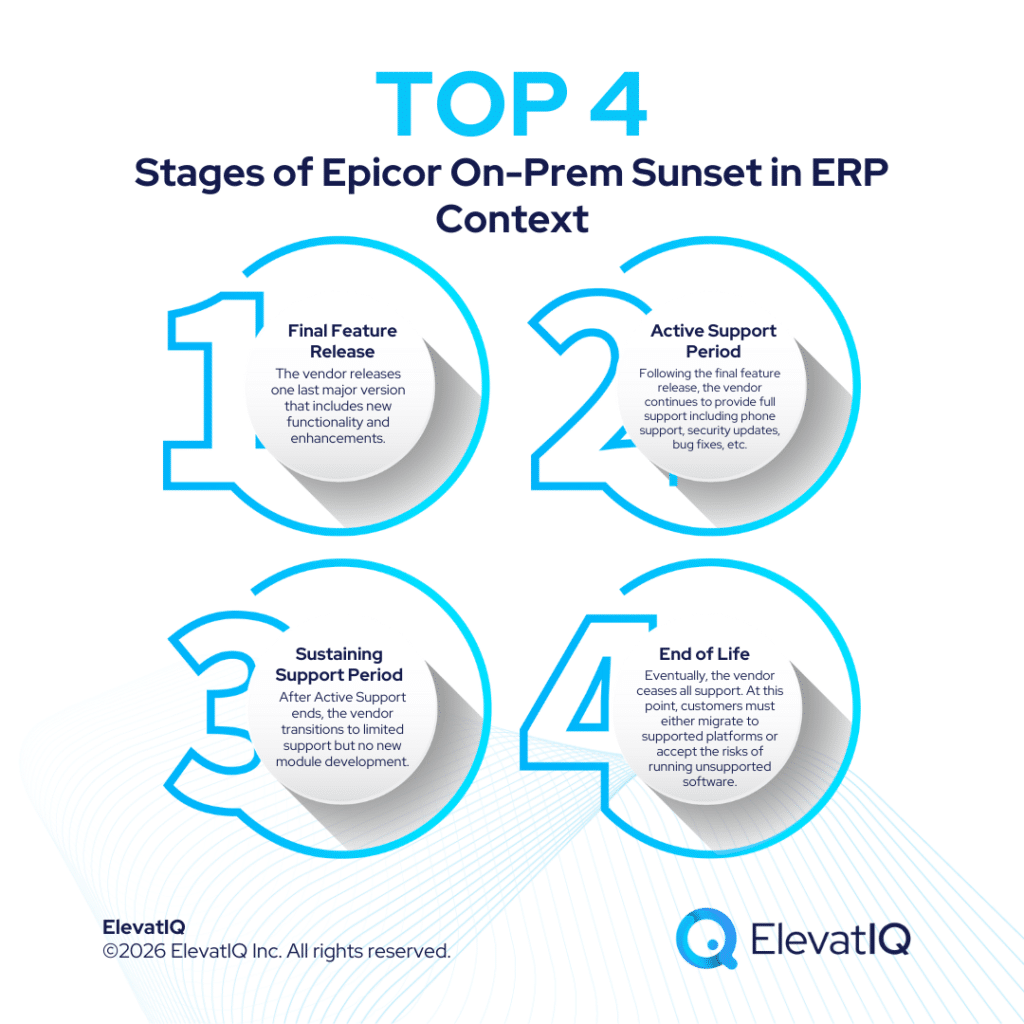
Organizations choosing to stay on-premise through Epicor’s Sustaining Support period (begins January 2030) face this cost structure:
Upfront investment (already sunk for existing customers):
- Perpetual licenses: $320,000 (75 users × $4,000–$4,800/user average)
- Initial implementation: $450,000 (1.5× software cost for mid-complexity deployment)
Annual ongoing costs:
- Maintenance and support: $64,000 annually (20% of license value)
- Infrastructure (servers, storage, backup): $25,000 annually
- Internal IT support (1 FTE dedicated): $90,000 annually
10-year TCO: $320,000 (licenses, sunk) + $450,000 (implementation, sunk) + $1,790,000 (ongoing costs) = $2,560,000 total, but $770,000 already spent, leaving $1,790,000 future commitment.
Cloud Subscription TCO Model (Epicor Cloud Migration)
Organizations migrating to Epicor Cloud face this structure:
Migration investment:
- Ascend program migration services: $200,000
- Customization conversion: $300,000 (mid-range for 20+ customizations)
- Integration rebuilding: $125,000 (5–7 integrations)
- Data migration (complex): $75,000
- Total migration cost: $700,000
Annual ongoing costs:
- Subscription licenses: $180,000 Year 1, escalating 4% annually
- Cloud infrastructure (minimal): $5,000 annually (vendor-managed)
- Internal IT support (0.5 FTE): $45,000 annually (reduced from on-premise)
10-year TCO: $700,000 (migration) + $2,190,000 (subscription over 10 years) + $450,000 (reduced IT support) = $3,340,000 total.
Illustrative Comparison: Cloud Costs Approximately 87% More Over 10 Years
Comparing future commitments (since perpetual licenses are sunk costs):
- On-premise future costs (10 years): $1,790,000
- Cloud migration total costs (10 years): $3,340,000
- Cloud premium in this scenario: approximately $1,550,000 (about 87% higher)
This analysis assumes 4% subscription escalation. If Epicor increases prices 5–6% annually (which may occur in situations where vendor lock-in significantly reduces available alternatives), the cloud premium exceeds 100%.

ERP System Scorecard Matrix
This resource provides a framework for quantifying the ERP selection process and how to make heterogeneous solutions comparable.
Contract Lock-In: Why Migration Eliminates Future Negotiating Leverage
The financial analysis above assumes organizations can exit cloud subscriptions if costs become prohibitive. Reality: cloud migration creates operational dependencies that make switching vendors financially and operationally infeasible, reducing the leverage available to negotiate favorable renewal terms.
The Dependency Trap Cloud Architecture Creates
Once organizations migrate to Epicor Cloud, switching costs include:
Technical switching costs:
- Data migration from Epicor Cloud to alternative vendor: $100,000–$300,000
- Re-implementation of business processes: $500,000–$1,500,000
- Integration rebuilding (again): $150,000–$400,000
- Customization recreation in new platform: $200,000–$600,000
Operational switching costs:
- Business disruption during 12–18 month re-implementation
- User productivity loss during transition and retraining
- Risk of go-live failures that halt operations
Total switching costs can range from approximately $1,000,000–$3,000,000 or more depending on scope and complexity for mid-market organizations, making vendor change economically prohibitive once cloud migration is complete.
What This Means for Subscription Renewal Negotiations
When switching costs exceed $1–$3 million, subscription renewal pricing reflects that reality. Organizations cannot credibly threaten to leave, so vendors may have limited incentive to limit price increases beyond contractual escalation caps (which themselves compound over time).
Renewal pricing patterns in locked-in cloud ERP:
- Years 1–3: Contractual escalation (3–5% annually as agreed)
- Years 4–5: First major renewal, vendors may seek higher increases (e.g., 8–12%) depending on market conditions and contract terms, often citing “market rates”
- Years 6–10: Annual increases of 6–10% may occur in some cases as alternatives disappear
The initial $180,000 annual subscription could increase significantly over time (e.g., exceeding $300,000 annually by Year 10 in some scenarios) through aggressive renewal pricing enabled by lock-in.
What Independent ERP Advisors Reveal About True Options
The challenge CFOs face in evaluating Epicor migration cost is information asymmetry. Epicor sales teams may focus on migration costs and emphasize subscription affordability, while placing less emphasis on long-term TCO considerations. Internal IT teams lack visibility into how other organizations have navigated similar decisions and what costs they actually incurred.
Independent ERP advisors provide:
- Benchmark data on actual migration costs organizations experienced (not vendor quotes, but realized expenses documented 12–24 months post-migration)
- TCO modeling across all three paths (Epicor Cloud, extended on-premise, alternative vendors) using organization-specific customization counts, integration complexity, and user growth projections
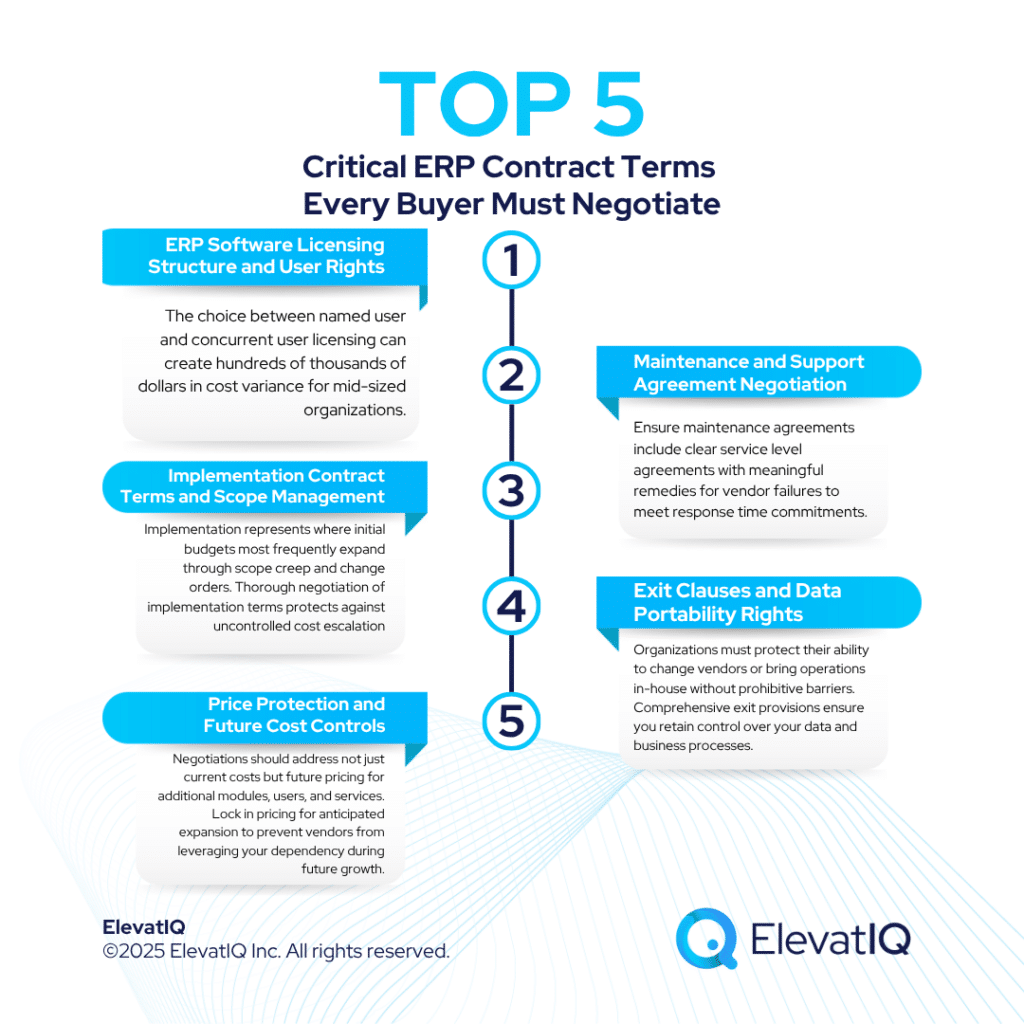
- Contract negotiation leverage to secure subscription escalation caps, multi-year pricing locks, and exit provisions that preserve optionality if cloud costs escalate beyond budgets
The return on advisory engagement is measurable. An advisor fee of $75,000 that identifies $500,000 in hidden migration costs Epicor’s Ascend program excludes, negotiates 3% vs. 5% subscription escalation (saving $200,000+ over 10 years), and provides alternative vendor options that reduce switching costs could deliver significant ROI (e.g., 9× in an illustrative scenario) before implementation begins.
The Conclusion
Epicor migration cost determination happens in two phases: the quoted phase during migration sales cycles when vendors compete for business, and the realized phase 12–36 months post-migration when hidden costs, subscription escalations, and operational dependencies become financially material. Organizations that accept vendor migration quotes as comprehensive TCO analyses often discover that costs may exceed initial projections by a significant margin in some cases once customization conversion, integration rebuilding, and long-term subscription escalation are included.
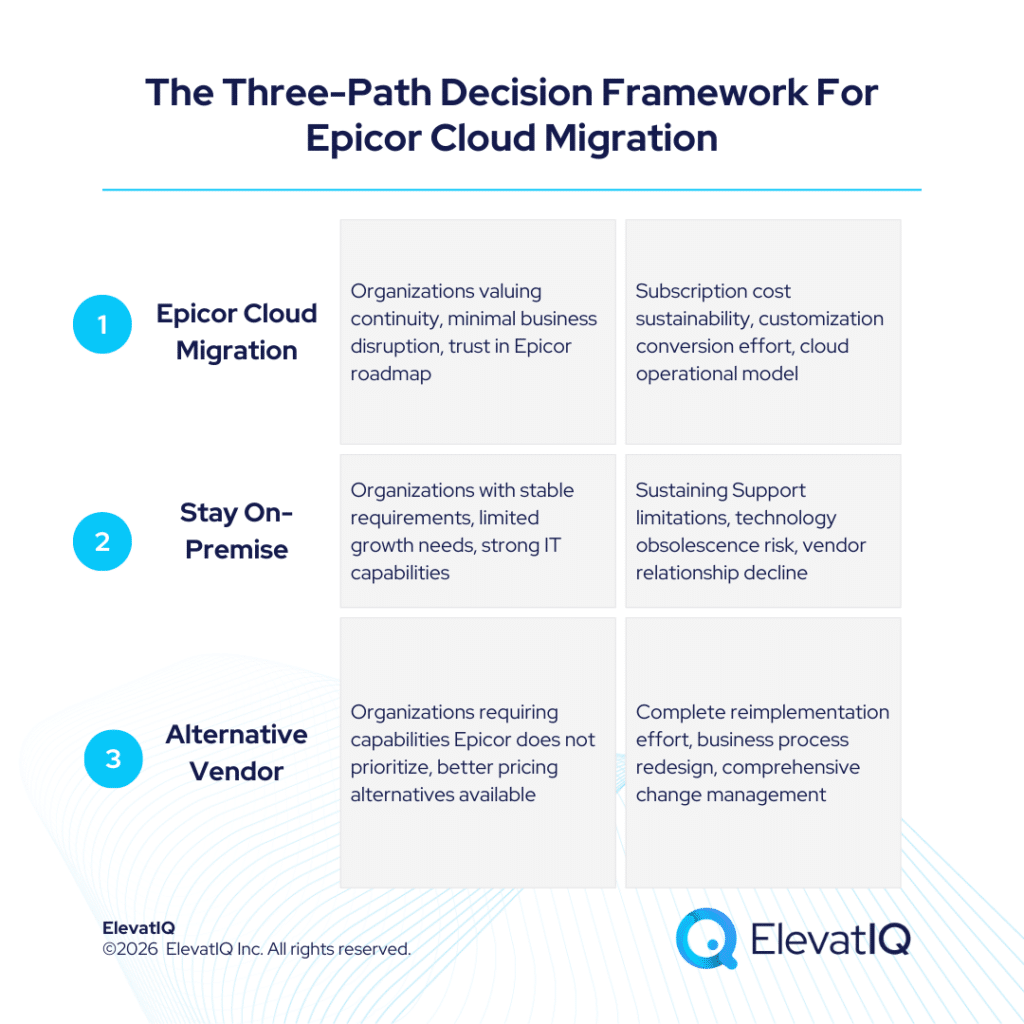
The financial decision is not “should we migrate because on-premise is sunset” but “which path – Epicor Cloud, extended on-premise through Sustaining Support, or alternative vendor, delivers the lowest 10-year TCO given our customization complexity, integration requirements, and subscription escalation projections?” That analysis requires modeling all cost categories vendors may not fully emphasize, comparing perpetual vs. subscription structures across realistic timelines, and understanding contract lock-in implications before operational dependencies significantly reduce negotiating leverage.
For CFOs and finance leaders currently evaluating Epicor’s cloud migration mandate, the team at ElevatIQ provides independent ERP advisory support across TCO modeling, migration cost benchmarking, contract negotiation, and alternative vendor evaluation, at exactly the stage where these decisions determine whether cloud migration creates long-term value or 10-year cost escalation locked in through vendor dependency.
All cost estimates represent industry benchmarks and documented pricing ranges. Actual costs vary based on organizational complexity, customization requirements, and vendor negotiations.

ERP Selection: The Ultimate Guide
This is an in-depth guide with over 80 pages and covers every topic as it pertains to ERP selection in sufficient detail to help you make an informed decision.
FAQs
Related Posts: