

Last Updated on May 11, 2026 by Shrestha Dash
The ERP system is rarely the only platform an enterprise operates. Most organizations run a layered digital ecosystem including CRM, warehouse management, eCommerce, EDI, business intelligence, and a growing set of specialized applications. All of which need to exchange data with the ERP at different speeds, frequencies, and levels of reliability. The way these connections are designed determines whether the ecosystem behaves as a coordinated system or as a fragile network of dependencies.
ERP integration architecture is not simply about connecting systems. It is about defining how information moves through the organization, how consistent that information remains across systems, and how resilient those connections are under operational stress. Poor integration design does not fail immediately. It degrades gradually, until inconsistencies, delays, and failures begin to affect core business processes.

Why ERP Integration Architecture Decisions Matter Early
Integration is often treated as a downstream activity in ERP programs. The primary focus during planning is typically on core ERP functionality, module selection, and configuration. Integration is deferred, with the assumption that systems can be connected as needed once the ERP is in place. This sequencing introduces structural risk.
When integration is approached reactively, each connection is built to solve an immediate need. A CRM integration is implemented to synchronize customer data. A warehouse system is connected to support inventory updates. A reporting layer is added to extract transactional data. Each integration works in isolation, but no overarching design governs how they interact.
Over time, this leads to three predictable outcomes:
- Accumulated technical debt: Each integration uses different patterns, tools, and assumptions.
- Inconsistent data states: Systems fall out of sync because there is no defined source of truth.
- Increased fragility: A change in one system has unintended consequences across multiple integrations.
These issues are rarely visible at go-live. They emerge as transaction volumes increase, systems evolve, and dependencies multiply. Defining ERP integration architecture early forces organizations to answer foundational questions before implementation begins: what systems will exchange data, what those data flows represent in business terms, and what level of consistency and latency is acceptable. Without these answers, integration becomes an accumulation of tactical solutions rather than a designed system.
Real-Time vs. Batch: A Decision About Business Behavior, Not Technology
One of the most misunderstood decisions in ERP integration architecture is whether to use real-time or batch integration. This is often framed as a technical choice, but it is fundamentally a business decision about how quickly information needs to move to support operations.
Real-Time Integration: Where It Adds Value and Risk
Real-time integration is appropriate when a delay in data creates immediate operational consequences. For example, if an eCommerce platform displays inventory availability that is not current, customers may place orders that cannot be fulfilled. Similarly, credit validation during order entry requires up-to-date financial data.
However, real-time integration introduces coupling between systems. When one system depends on another to respond immediately, any delay, outage, or failure propagates across the workflow. This creates a chain of dependency where system reliability becomes interdependent.
In practice, organizations often underestimate the operational requirements of real-time integration:
- APIs must handle peak loads, not average volumes
- Error handling must account for partial failures
- Retry mechanisms must prevent data duplication or inconsistency
- Monitoring must detect failures before they impact business operations
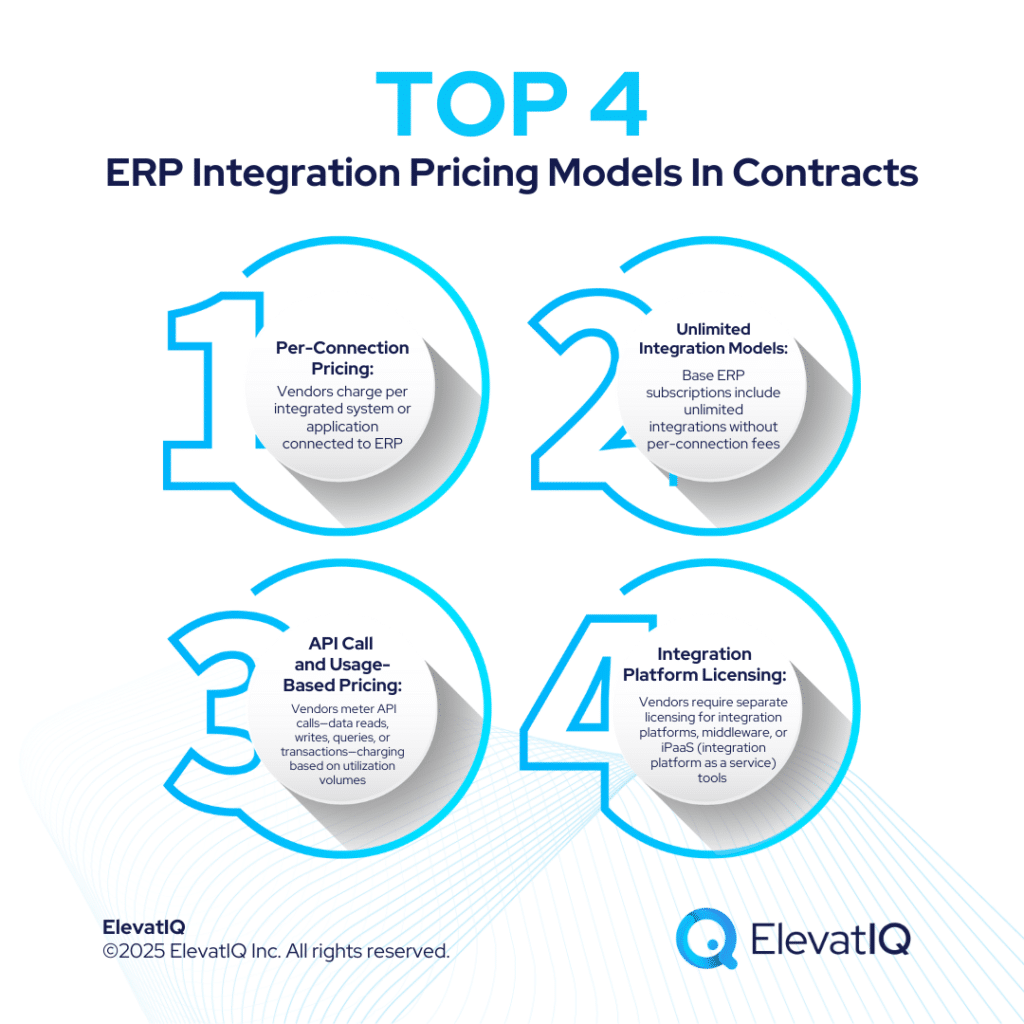
Additionally, real-time integration has commercial implications. Many ERP vendors impose API rate limits or charge based on transaction volume. A design that appears technically sound can become financially unsustainable if these factors are not considered.


ERP Selection Requirements Template
This resource provides the template that you need to capture the requirements of different functional areas, processes, and teams.
Batch Integration: The Default That Is Often Overlooked
Batch integration is often treated as a legacy approach, but in many cases, it is the more appropriate design choice. When business decisions do not require immediate data synchronization, batch processing offers stability and efficiency.
Financial postings, reporting data extraction, and master data synchronization are typically well-suited to batch processing. These processes benefit from controlled execution windows, reduced system load, and simpler error handling.
The key mistake organizations make is defaulting to real-time integration without a clear business requirement. Real-time becomes the default because it appears more modern, not because it is necessary. This increases system complexity without delivering proportional value. A well-designed ERP integration architecture uses real-time selectively and defaults to batch wherever latency does not affect decision-making.

ERP System Scorecard Matrix
This resource provides a framework for quantifying the ERP selection process and how to make heterogeneous solutions comparable.
Middleware: Control Layer or Additional Complexity?
As integration points increase, organizations face a structural choice: continue building direct system-to-system connections or introduce a middleware layer to manage integrations centrally. Middleware platforms, including iPaaS tools like MuleSoft, Boomi, and Workato, provide capabilities for data transformation, routing, monitoring, and error handling. In theory, they simplify integration management. In practice, their effectiveness depends on how they are implemented.
When Middleware Solves the Right Problem
Middleware becomes valuable when:
- Multiple systems need to exchange data in different formats
- Integrations require centralized monitoring and control
- Business logic needs to be decoupled from individual systems
- The integration landscape is expected to grow over time
In these scenarios, middleware acts as an abstraction layer that reduces direct dependencies between systems.
When Middleware Introduces New Risks
However, middleware is not inherently beneficial. When implemented without a clear architectural role, it can introduce additional complexity:
- It becomes another system to manage and maintain
- Performance bottlenecks may emerge if not properly scaled
- Integration logic becomes distributed between systems and middleware
- Skills required to manage the platform may not exist internally
One of the most common mistakes is selecting a middleware platform before defining integration requirements. This often leads to architecture being shaped by tool capabilities rather than business needs.
Another overlooked factor is vendor policy. ERP vendors may restrict API access, impose additional costs for integration tools, or limit compatibility with third-party platforms. These constraints must be evaluated during architecture design, not after implementation. Middleware should be selected as a response to architectural needs, not as a default solution.
Integration Governance: The Difference Between Architecture and Entropy
Even well-designed integration architectures degrade without governance. Over time, systems change, new integrations are added, and existing connections are modified. Without defined processes, these changes introduce inconsistencies and hidden dependencies. Integration governance establishes how decisions are made and how integrations are maintained. It answers questions that are often left implicit:
- Who owns integration design decisions?
- How are integrations documented and versioned?
- What testing is required before deployment?
- How are changes in one system communicated to dependent systems?
In the absence of governance, integration environments tend to evolve into undocumented systems where knowledge is distributed across individuals rather than captured in design artifacts. A common failure pattern is reliance on specific developers or consultants who understand how integrations work. When those individuals are no longer available, debugging becomes significantly more difficult.
Effective governance does not require complex processes. It requires consistency. Documentation standards, ownership clarity, and change management protocols ensure that the architecture remains coherent over time.
Failure Patterns in ERP Integration Architecture
ERP integration issues rarely present as immediate failures. They manifest gradually as the system landscape becomes more complex. Recognizing common failure patterns helps organizations identify risks early.
- Point-to-Point Proliferation: Organizations begin with a few direct integrations. As new requirements emerge, additional connections are added without a centralized design. Over time, the number of integrations grows exponentially, creating a network that is difficult to manage.
- Undefined Source of Truth: When multiple systems maintain overlapping data, inconsistencies arise. Without a clear definition of which system owns specific data elements, synchronization becomes unreliable.
- Overuse of Real-Time Integration: Systems become tightly coupled, increasing the impact of failures. A delay in one system affects multiple downstream processes.
- Lack of Monitoring and Observability: Failures are detected only after they impact business operations. Without centralized monitoring, issues remain hidden until they create visible problems.
- Vendor Dependency Constraints: Integration design is limited by vendor policies, such as API restrictions or additional costs, which were not considered during architecture planning.
These patterns do not emerge from poor technical execution. They result from the absence of architectural discipline.
Designing for Scale: Beyond Initial Implementation
Scalability in ERP integration architecture is not limited to handling higher transaction volumes. It includes the ability to adapt to new systems, evolving business models, and changing operational requirements.
An integration architecture that works at go-live may not scale if:
- It relies heavily on manual intervention
- It lacks standardized patterns for new integrations
- It depends on specific tools or skills that are not widely available
Designing for scale requires anticipating future conditions. This includes:
- Growth in transaction volumes
- Addition of new applications
- Changes in business processes
- Increased regulatory or reporting requirements
Organizations that treat integration as an architectural discipline rather than a series of projects, are better positioned to manage these changes.
Conclusion
ERP integration architecture is not simply a technical design exercise. It is a structural decision that shapes how reliably information flows across the enterprise, how resilient systems remain under operational stress, and how effectively the digital ecosystem can scale over time. Organizations that approach integration reactively often accumulate complexity that becomes increasingly difficult to manage, while those that define architecture early establish a foundation for consistency, maintainability, and long-term adaptability.
The challenge is not that integration decisions are inherently complex, but that their implications are often not fully visible at the time they are made. Choices around real-time versus batch processing, middleware selection, and governance frameworks carry downstream consequences that may only surface under scale, system change, or failure conditions.
Independent ERP advisors can provide meaningful value at this stage, not by prescribing specific tools or platforms, but by helping organizations evaluate integration architecture decisions in the context of their broader system landscape. This includes identifying where complexity is likely to accumulate, how vendor constraints may affect integration design, and which architectural patterns are appropriate given business requirements rather than implementation preferences.
Organizations navigating ERP transformation can benefit from the vendor-neutral perspective that ElevatIQ brings through its Solution and Enterprise Architecture Design and Enterprise Technology Selection advisory services. Designing how systems connect is as critical as selecting the systems themselves, and ensuring that those connections are intentional, scalable, and aligned with business operations is fundamental to building a digital ecosystem that performs reliably over time.

ERP Selection: The Ultimate Guide
This is an in-depth guide with over 80 pages and covers every topic as it pertains to ERP selection in sufficient detail to help you make an informed decision.
Related Posts: